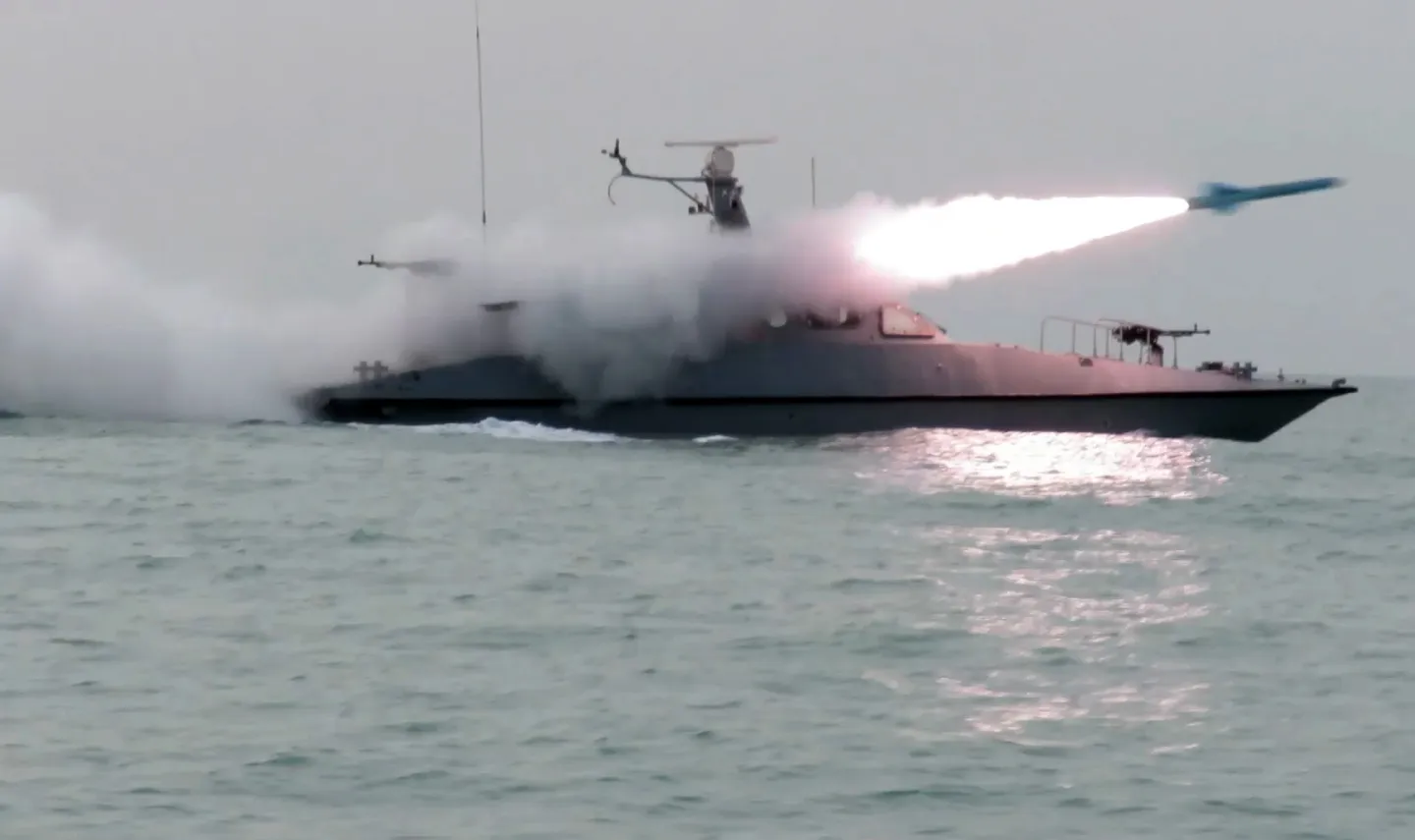
Latest Updates:
STRAIT OF HORMUZ: The US military will begin guiding stranded ships through the oil trade chokepoint today, though a US official said the initiative is not an escort mission. Iran warned that “any foreign military force” will be attacked if they try to approach or enter the strait, according to a top military official. Top Iranian official Ebrahim Azizi warned the plan is a violation of the ceasefire.
• SSEIZED SHIP TO BE RETURNED: An Iranian ship seized by the US will be returned and the crew repatriated, according to Pakistan’s foreign ministry. Pakistan, a key mediator in peace talks, described the move as “a confidence-building measure” by the US.
• STATE OF NEGOTIATIONS: President Donald Trump said his representatives “are having very positive discussions” with Iran. The Iranian Foreign Ministry said Tehran is reviewing the US reply to its latest peace proposal.
• US GAS PRICES: The average cost of gas in the US has soared to $4.45 a gallon — a rise of nearly 50% since the beginning of the war.
Oil prices briefly dip on US plan to guide ships out of Strait of Hormuz:
Oil prices fell in early trade after the White House announced a plan to guide boats out of the choked Strait of Hormuz, but then steadied as traders took a wait-and-see approach to whether the plan would work.
Brent crude futures for July, the global benchmark, were down 0.7% at $108.97 per barrel at 4.25 a.m. ET. West Texas Intermediate futures, the US benchmark, decreased by 0.62% to $97.14 a barrel.
US President Donald Trump announced the plan, dubbed “Project Freedom”, on Sunday, as fraught discussions to end the hostilities with Iran roll on. The US military will use a flurry of arsenal and thousands of service members to free vessels stuck in the Strait, according to CENTCOM.
Tehran immediately rebuffed the measure, warning that any “foreign military force” will be attacked if they try to enter the channel, according to a senior military official.
Meanwhile, officials in Tehran are reviewing the US response to their 14-point proposal submitted last week. Until now, efforts to bring both parties back to the negotiating table have failed over key sticking points – including the US’ demand that Tehran surrender its nuclear stockpile and Iran’s demands that the US lift crippling economic sanctions and pay reparations for its recent attacks.
US-seized Iranian ship and its crew to be returned to Iran, Pakistani officials say:
Crew members from an Iranian ship seized by the US after trying to breach its military blockade last month have been transferred to Pakistan for repatriation, according to Pakistan’s foreign ministry.
Twenty-two crew members held aboard the M/V Touska container ship were taken to Pakistan Sunday night and will be handed over to Iranian authorities Monday, the ministry said in a statement Monday.
“The Iranian ship will also be backloaded to Pakistani territorial waters for return to its original owners after necessary repairs,” the statement said.
Pakistan described the move as “a confidence-building measure” by the US, and said the repatriation is being coordinated with the support of both the US and Iran.
US forces fired on and seized the Iranian-flagged M/V Touska on April 19 after it tried to get past the US naval blockade and ignored six hours of warnings, US Central Command previously said.
Iran warns foreign military “will be attacked” if they try to enter Strait of Hormuz:
Iran has warned that “any foreign military force, especially the invading American army … will be attacked” if they try to approach or enter the Strait of Hormuz, according to a top military official.
Maj. Gen. Ali Abdollahi, the commander of Iran’s Khatam al-Anbiya Central Headquarters, the unified command of Iran’s armed forces, said Iran will protect the security of the strait “with full strength” in statement on Monday after the US pledged to guide stranded ships through the oil shipping chokepoint.
“We maintain and powerfully manage the security of the Strait of Hormuz with full strength and announce to all commercial ships and oil tankers to refrain from any transit without coordination with the armed forces stationed in the Strait of Hormuz so that their security is not endangered,” Abdollahi said.


