Latest Updates:
NEGOTIATIONS STALL: Iran’s foreign ministry said its response to a US proposal to end the war, which state media reported included recognition of sovereignty over the Strait of Hormuz, was “reasonable” and “generous.” The terms were described yesterday by President Donald Trump as “totally unacceptable.”
• NETANYAHU WEIGHS IN: Trump spoke with Israeli Prime Minister Benjamin Netanyahu yesterday, according to a source and an Israeli official. Netanyahu, in an interview with CBS’ “60 Minutes,” said there was “work to be done” in Iran and acknowledged it retained many of the capabilities it had before the war started.
• ENERGY CRISIS: Oil prices are climbing after Trump’s dismissal of Iran’s latest terms, sparking fears of a fresh escalation in the conflict that would keep the vital Strait of Hormuz closed for even longer.
Iran rejects Trump criticism, says counterproposal was “generous”:
Iran’s most recent proposal to end the US-Israeli war was reasonable and generous, Iranian foreign ministry spokesperson Esmail Baghaei said today following condemnation from US President Donald Trump.
“Everything we proposed in our text consisted of reasonable demands, responsible requests and generous proposals – not only for Iran’s national interests, but for the good, stability and security of the entire region and the world,” Baghaei said during a press conference carried by Iranian TV.
Trump on Sunday called the proposal from Iran “totally unacceptable.”
Tehran’s demands included an end to the war in the region, an end to what Baghaei called “maritime piracy against Iranian ships” and the release of Iranian assets that have been “frozen in foreign banks because of US pressure,” the Iranian official said.
Iranian state media reported that the demands in Iran’s counterproposal also included recognition of sovereignty over the blockaded Strait of Hormuz and compensation for war damages.
Here’s what Iran counterproposed, which Trump called “totally unacceptable”:
US President Donald Trump on Sunday called the most recent peace proposal from Iran “totally unacceptable” as the two countries struggle to make a deal to end the monthslong war.
“I have just read the response from Iran’s so-called ‘Representatives.’ I don’t like it — TOTALLY UNACCEPTABLE!” he wrote in a post.
Tehran’s counter-proposal included recognition of sovereignty over the blockaded Strait of Hormuz and a demand for compensation for war damages, Iranian state media reported. The proposal demands the release of frozen Iranian assets as well as the lifting of sanctions.
Iran is also seeking an end to fighting on all fronts, including in Lebanon, reported Reuters, citing Iranian state TV.
Iranian state media reports on the counter-proposal so far did not mention the country’s nuclear program.
Trump has drawn a hard line on the Iranian nuclear program, which Tehran has resisted.
The US laid out a “very clear red line” in its latest proposal, US ambassador to the United Nations Mike Waltz said earlier on Sunday. “President Trump has been clear they will never have a nuclear weapon and they cannot hold the world’s economies hostage,” Waltz told “Fox News Sunday.”
Oil prices climb after Trump rejects Iran’s peace proposal:
Oil prices are rising today, after US President Donald Trump dismissed Iran’s latest terms to end the war, sparking fears of a fresh escalation in the conflict that would keep the vital Strait of Hormuz shuttered for even longer.
Brent crude, the global oil benchmark, was up 2.9% to $104.2 a barrel. WTI, the US benchmark, rose 2.4% to $97.7 a barrel.
Trump said Iran’s latest peace proposal was “totally unacceptable,” in a Truth Social post Sunday. Tehran wants its sovereignty over the Strait of Hormuz recognized and has also demanded compensation for war damages, according to Iranian state media.
Trumps’ comments “nudge in the direction of re-escalation – potentially more shooting – but I’d think there is going to be a fresh olive branch,” Neil Wilson, a strategist at Saxo bank wrote in a note.
Crude prices are up around 45%, or some $30 a barrel, since the war started, blockading a waterway that is ordinarily a conduit for around a fifth of the world’s global oil and natural gas supply.
While some producers, including Saudi Arabia and the United Arab Emirates, have found alternative routes for their exports, around 10-12 million barrels of crude remain choked off from global markets per day, according to analysts.
“We still think that we are moving towards a deal, but both parties want to have an upper hand in negotiations,” chief European economist at Jefferies, Mohit Kumar wrote in a note. “The longer the Strait of Hormuz remains closed, the more negative it is for the global economy.”
Britain and France to host defense ministers meeting on Strait of Hormuz:
Britain and France will host defense ministers from various nations on Tuesday to discuss military plans for restoring trade flow in the Strait of Hormuz, the British government said.
“The Defence Secretary John Healey MP will co-chair a meeting of over 40 nations, alongside his French counterpart, Minister Catherine Vautrin, for the multinational mission’s first Defence Minister’s meeting,” a British defense ministry statement said.
Iran’s Deputy Foreign Minister Kazem Gharibabadi on Sunday warned Britain and France against deploying their warships in the Strait of Hormuz.
Britain announced Saturday it was sending its HMS Dragon warship to the Middle East as part of a “strictly defensive” plan to support mine clearance and protect vessels.
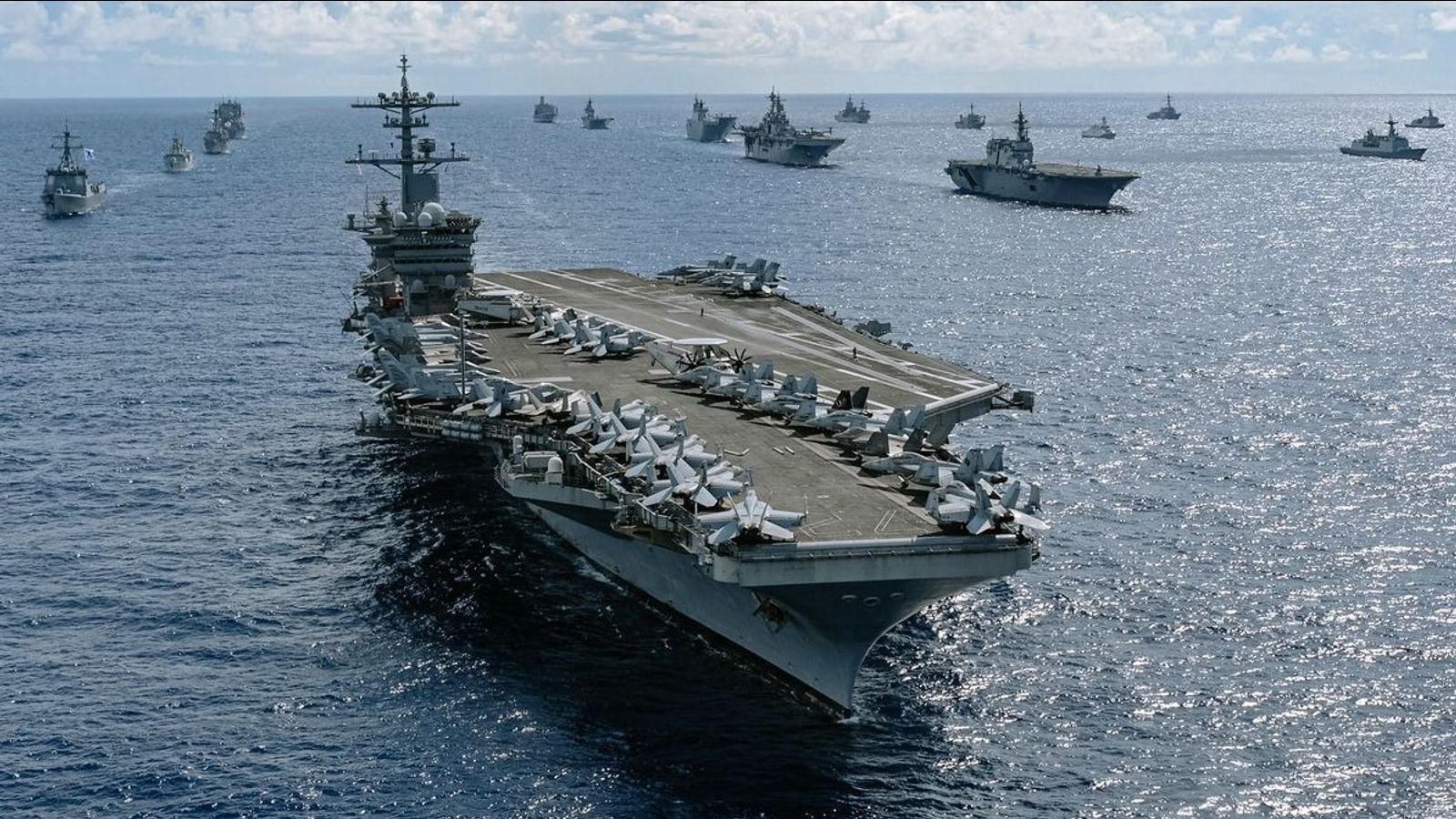
Last week, France deployed its carrier strike group to the Red Sea as part of planning for a potential mission to secure the Strait of Hormuz, its armed forces ministry said in a statement.
Britain and France have led an effort to build a multinational mission to secure shipping in the waterway while encouraging other international partners to participate.
Healey said he has directed HMS Dragon to the Middle East “so Britain is in position to support this mission the moment it is needed.”


